Colonial Park is one of the Harrisburg area’s well-established suburban communities, located in Lower Paxton Township a few miles northeast of the city center. Known for its sidewalk-lined residential streets, mature landscaping, and proximity to the Colonial Park Mall and surrounding retail corridors along Union Deposit Road and Jonestown Road, the neighborhood blends quiet residential blocks with a busy commercial edge. That combination means asphalt paving needs in Colonial Park range from single-family driveways to retail parking areas, each with somewhat different demands.
This article covers the general, informational questions that residents and property owners in Colonial Park frequently have about asphalt pavement, from how a mix of residential and commercial development affects local paving considerations to the basics of seasonal maintenance in this part of Dauphin County.
A Neighborhood With Two Kinds of Pavement Needs
Colonial Park’s residential streets, many lined with two-story homes and generous, manicured lawns, primarily need driveway paving suited to standard passenger vehicle traffic and everyday wear. A few miles away along the neighborhood’s commercial edge, retail parking lots and access drives near the mall and surrounding shopping centers experience a very different traffic pattern, with constant vehicle turnover, delivery trucks, and higher overall usage throughout the day.
Understanding this distinction is useful background for anyone in the area researching asphalt paving, since the appropriate base thickness, asphalt mix, and maintenance schedule differ meaningfully between a quiet residential driveway and a retail parking lot handling daily commercial traffic.
How Residential Driveways Age in Colonial Park
Many homes in Colonial Park were built between the 1940s and 1990s, meaning driveways throughout the neighborhood are at varying stages of their lifespan, with some having been repaved more recently than others. A well-installed residential driveway generally lasts fifteen to twenty-five years with regular maintenance, though mature trees common throughout the neighborhood’s established lawns can introduce root-related heaving in some cases, particularly on older driveways that were paved before certain trees reached their current size.
Homeowners who notice a section of driveway lifting slightly, especially near a large tree, are often seeing the early stages of root intrusion, which is worth monitoring and addressing before it develops into a more significant crack or trip hazard.
Commonly Asked Questions About Asphalt Maintenance
How often should sealcoating be applied? General guidance recommends sealcoating every two to three years for both residential driveways and commercial lots, though high-traffic commercial surfaces may benefit from more frequent inspection even if the sealcoating interval stays the same.
What is the difference between resurfacing and patching? Patching addresses a specific damaged area, like a pothole or a cracked section, without touching the rest of the surface, while resurfacing applies a new layer of asphalt over the entire existing surface, provided the base beneath it is still sound.
Why does asphalt sometimes look faded or gray after a few years? Sun exposure gradually oxidizes the asphalt binder at the surface, which is a normal part of aging and one of the main reasons periodic sealcoating is recommended to slow that process.
Can a driveway be paved over an existing older driveway? In many cases yes, provided the existing base is structurally sound, though a professional evaluation is needed to confirm the old surface can support a new layer without trapping moisture or existing damage underneath.
Retail and Commercial Lot Considerations Near Union Deposit Road
The commercial areas near Colonial Park Mall and the surrounding shopping centers see a very different demand profile than residential streets a few blocks away. Constant vehicle turnover concentrates wear near entrances, exits, and drive lanes, which is why commercial parking lots typically require a thicker base layer and a more durable asphalt mix than a home driveway built primarily for passenger cars.
Drainage is also a bigger consideration on large commercial lots, since a poorly graded parking area can direct significant volumes of stormwater toward a single low point, increasing the risk of standing water and accelerated pavement breakdown in that spot if not addressed during the original design or a later repaving project.
The Role of Central Pennsylvania’s Climate
Colonial Park, like the rest of the Harrisburg region, experiences a full four-season climate that includes cold winters with repeated freeze-thaw cycles. This pattern is one of the most consistent contributors to asphalt cracking anywhere in the area, since water trapped in small surface cracks expands each time it freezes, gradually widening those cracks over the course of a winter.
Inspecting pavement each fall before winter weather arrives, and again each spring once the coldest temperatures have passed, is a simple habit that helps property owners catch developing cracks while they are still small enough to seal rather than requiring a larger repair.
Recognizing When Professional Evaluation Is Needed
While routine upkeep like clearing debris and filling small cracks can be handled by most property owners, certain signs point toward needing a more thorough evaluation. Widespread cracking, sinking sections, or pooling water that returns after every rain are all indicators that the pavement’s base has been compromised in that area.
A reliable asphalt contractor Colonial Park residents and business owners turn to can typically walk a property, identify whether an issue is cosmetic or structural, and explain which type of repair, whether sealing, patching, resurfacing, or full replacement, fits the specific situation.
How Established Landscaping Influences Pavement Condition
Colonial Park’s reputation for mature trees and generous, manicured lawns is part of its long-standing appeal, but established landscaping does interact with nearby pavement in ways worth understanding. Sprinkler systems that overspray onto a driveway edge can contribute to more consistent moisture exposure along that section, while decorative landscaping beds bordering a driveway can sometimes trap organic debris against the asphalt if not maintained regularly.
None of this suggests that landscaping and pavement are at odds, but being aware of how they interact helps homeowners anticipate which sections of a driveway might show wear a little differently than others, simply due to their proximity to trees, sprinklers, or garden beds.
Pedestrian Areas and Sidewalk Considerations
Because Colonial Park is known for its sidewalk-lined streets, pavement condition extends beyond driveways to the sidewalk aprons connecting a property to the public walkway. These transition areas experience a mix of pedestrian foot traffic and occasional vehicle crossing, which creates its own wear pattern distinct from either a driveway or a full sidewalk. Cracks or unevenness at this transition point are common trouble spots, since the apron often bears weight from both directions.
Homeowners who walk their own property line periodically, checking not just the driveway itself but also the apron and any adjoining walkway sections, tend to catch developing issues in these transition areas before they become larger repair projects.
Planning Maintenance Around a Mixed-Use Neighborhood
Because Colonial Park includes both quiet residential streets and a busy commercial corridor, pavement conditions and needs can vary significantly even within a short distance. Staying informed about the basics, how traffic volume affects wear, how local climate contributes to cracking, and how tree roots and drainage influence a driveway’s long-term condition, helps residents and business owners alike plan maintenance proactively.
Whether the concern is a small residential driveway near Bright Bill Park or a busy retail lot along Union Deposit Road, the same core principles of proper drainage, timely crack sealing, and periodic professional evaluation apply, adjusted for the scale and traffic level of each property.
How Seasonal Mall Traffic Affects Nearby Commercial Pavement
Retail areas near Colonial Park Mall see fluctuating traffic volume throughout the year, with noticeably heavier vehicle activity during the holiday shopping season compared to quieter stretches earlier in the year. This seasonal variation means that commercial parking lots in the immediate area experience uneven wear distribution across the calendar, with a disproportionate share of annual traffic-related stress concentrated into just a few months.
Property managers overseeing retail lots near this corridor often find it useful to schedule pavement inspections either just before or just after the busiest shopping months, since that timing tends to reveal how the surface held up under its heaviest annual load.
Balancing Aesthetics With Function in a Well-Established Neighborhood
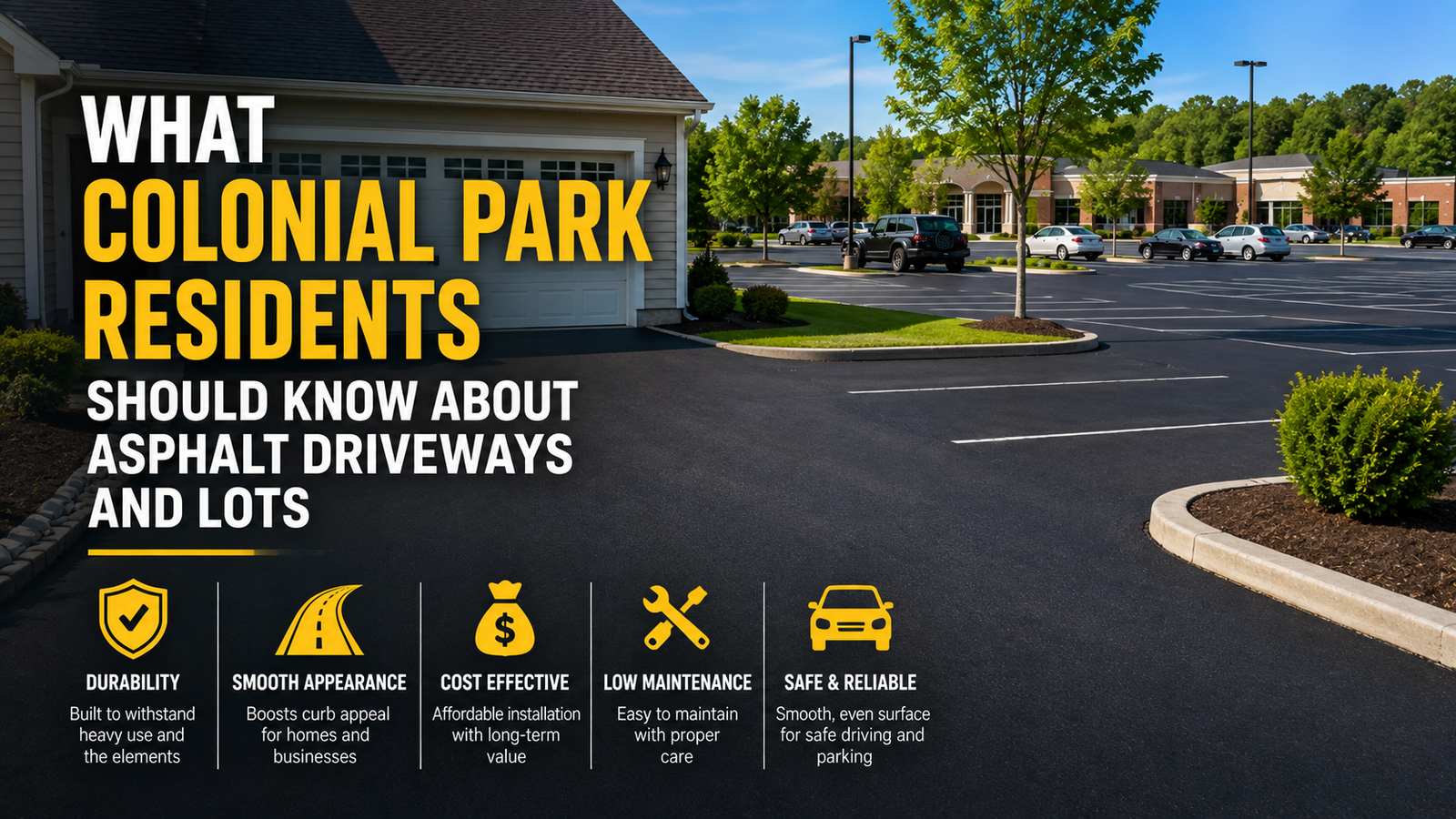
Colonial Park’s reputation as a well-kept, established neighborhood means that pavement condition often carries a visible role in a property’s overall curb appeal, alongside its practical function. A driveway with consistent color, clean edges, and no visible cracking contributes to the tidy, cared-for look that many residents value in this community, in addition to the more functional benefits of proper drainage and structural soundness.
This dual consideration, function and appearance working together, is a useful lens for homeowners in Colonial Park thinking about when to invest in sealcoating or minor repairs, since addressing small issues promptly tends to preserve both the practical performance and the visual condition of a driveway at the same time. It is also a helpful reminder that pavement maintenance, while often thought of as a purely functional task, contributes meaningfully to how a well-established neighborhood like this one continues to present itself over the years.