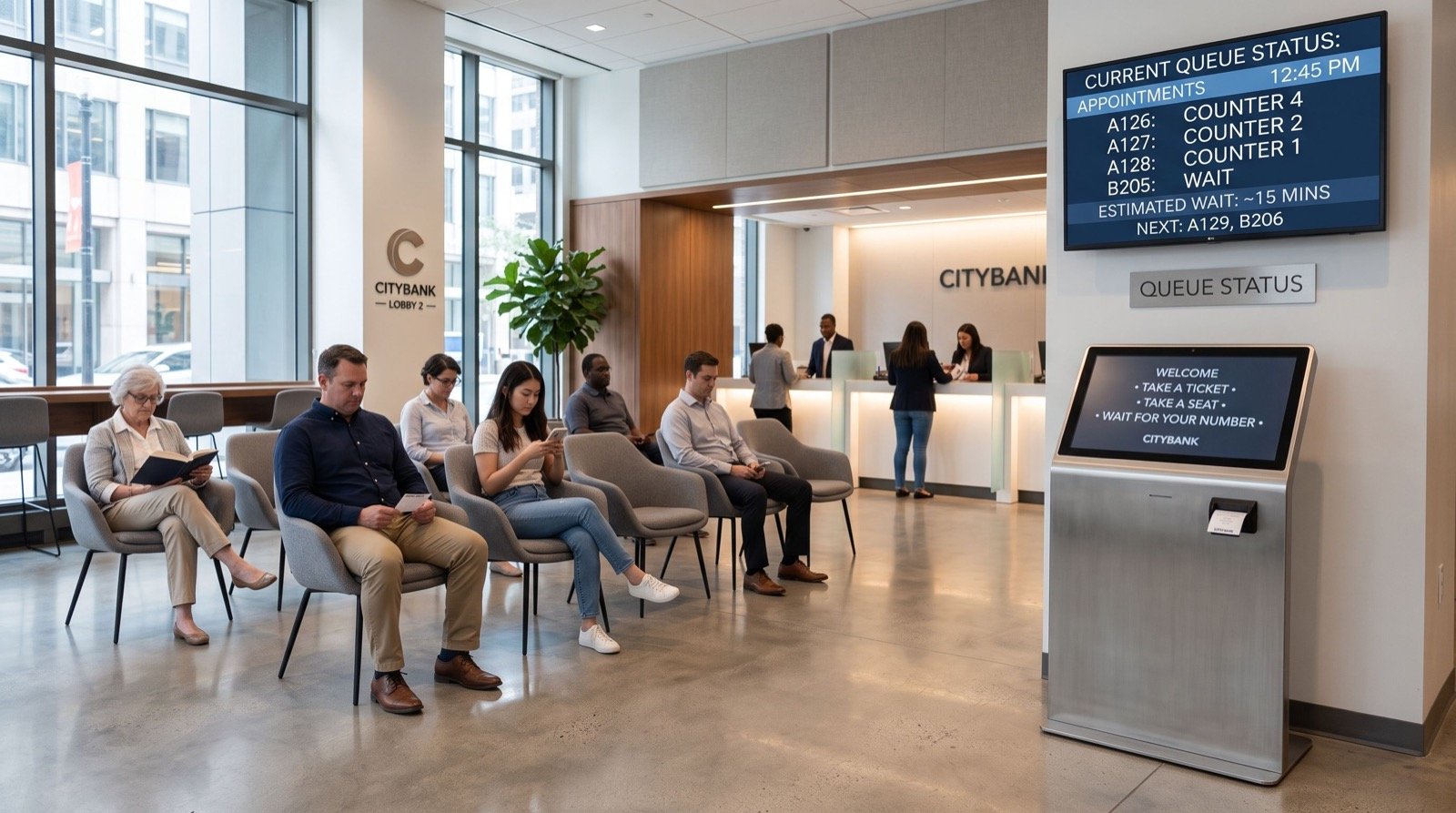

Queue Management System: 7 Features to Compare
Choosing a queue management system can feel overwhelming because every vendor claims to do the same thing. Yet the difference between a platform that transforms your branch and one that just adds another screen usually comes down to seven features. This 2026 buyer’s guide breaks them down so you can compare options with confidence, whether you run a single clinic or a growing retail chain.
We will keep it practical: what each feature does, why it matters, and the questions to ask a vendor before you sign anything.
Why a Queue Management System Is Worth Comparing Carefully
Customer patience is thinner than ever. A disorganised line pushes people toward competitors and drags down your reviews. The right platform, chosen well, does the opposite: it calms the floor, balances staff, and hands you data to keep improving.
Businesses in fast-growing cities have plenty of choice, and providers such as queue management system specialists now offer everything from single-counter kiosks to multi-branch cloud dashboards. That range is exactly why a structured comparison pays off.
The 7 Features That Separate Good From Great
1. Flexible ticket entry
Look for kiosks, QR codes, and mobile app entry. Offering more than one way to join the line keeps every visitor comfortable, from tech-savvy shoppers to first-time visitors.
2. Smart routing
The engine should send each visitor to the least-busy qualified counter, not a single first-come line. This one feature drives most of the wait-time improvement you will feel.
3. Bilingual displays and audio
Clear on-screen calling and voice announcements in local languages prevent confusion and missed turns, which matters in diverse, high-footfall locations.
4. Real-time analytics
You cannot improve what you cannot see. Live dashboards plus exportable historical reports turn everyday operations into decisions you can defend.
5. Appointment integration
Blending walk-ins with pre-booked appointments in one flow avoids double-lines and keeps your calendar honest.
6. Scalability
Whether you add counters or open new branches, the system should grow without a rebuild. Cloud licensing usually wins here.
7. Local support
Fast on-site help during peak hours protects everything above. Support is a feature, not a formality.
Comparing Deployment Models
| Model | Best for | Upfront cost | Scalability |
|---|---|---|---|
| On-premise | Single site, strict data rules | Higher | Moderate |
| Cloud | Multi-branch, growing chains | Lower | Excellent |
| Hybrid | Mixed compliance needs | Medium | Good |
For organisations operating across cities, cloud and hybrid models make it far easier to standardise the experience. A retailer scaling from Lahore into a queue management system in karachi deployment, for example, can manage every branch from one dashboard rather than juggling separate installs.
What Questions Should You Ask a Vendor?
A confident vendor answers these without hesitation. Bring this list to every demo in 2026:
- Can I see a live analytics dashboard, not just screenshots?
- What is your guaranteed support response time?
- How does routing decide which counter gets the next visitor?
- Does the system integrate with my existing booking or CRM tools?
- What happens to my data if I switch providers later?
Data ownership is often overlooked. Standards bodies like the W3C promote open, interoperable web technologies, and choosing a platform built on open standards makes future integrations and migrations far less painful.
A Practical Selection Tip
Do not shortlist on features alone. Run a two-week pilot at your busiest branch and watch the numbers before rolling out everywhere. Real footfall exposes weaknesses that no demo ever will, and it gives your staff time to adapt before you commit fully.
When you narrow the field, favour quality service providers with a proven local track record over the cheapest quote, because installation and ongoing support quality decide whether the system actually sticks.
Matching the System to Your Sector
No two industries queue the same way, so the “best” configuration shifts with your setting. A retail store optimises for quick browsing-to-checkout flow, while a clinic must protect privacy and stage patients through several steps. Reading your own environment honestly saves you from paying for features you will never switch on.
Consider how visitors behave before you fixate on specs. Do they arrive in unpredictable bursts, or steadily through the day? Do most need one quick service, or several? These patterns should drive your routing rules far more than a vendor’s feature checklist.
Quick sector snapshots
- Retail and telecom — prioritise fast entry and upsell-friendly displays.
- Healthcare — value privacy, multi-stage routing, and calm messaging.
- Banking — separate transactional visits from advisory appointments.
- Public services — need fair routing across many distinct services.
Avoiding Buyer’s Remorse
The most common regret is choosing on price and discovering the support cannot keep up. The second is buying a rigid system that cannot grow when a second or third branch opens. Both are avoidable with a little discipline during evaluation.
Insist on references you can actually call, ideally businesses similar to yours. Ask how the vendor handled a real outage, not a hypothetical one. A provider proud of its track record will happily connect you; hesitation is a signal worth heeding before you commit budget in 2026.
Frequently Asked Questions
What is the most important feature in a queue management system?
Smart routing usually delivers the biggest wait-time improvement, but it only shines when paired with reliable analytics and responsive local support.
Is a cloud queue management system secure?
Reputable cloud platforms use encryption and access controls comparable to banking software. Ask vendors about data residency and export options before deciding.
How long does a pilot usually take?
Two weeks at a busy branch is typically enough to see real trends in wait time, walkaways, and counter utilisation before a wider rollout.
Can small businesses benefit too?
Absolutely. Even a two-counter clinic gains from organised tickets, clearer calling, and basic analytics that reveal peak hours and staffing gaps.
Final Thoughts
The best queue management system for you is the one that matches your footfall, scales with your plans, and comes with support you can rely on during the rush. Compare on the seven features above, insist on a real pilot, and prioritise proven local partners. Get those calls right in 2026 and you will turn one of the most frustrating parts of the customer journey into a genuine competitive edge.